Launching the Application
Once installed, you can launch EasyScanlate from your system’s application menu (Start Menu on Windows). If you are running from source, execute py main.py in your terminal from the project directory.
Command Line Options
You can also launch EasyScanlate with a project file directly:
py main.py path/to/project.mmtlThis will skip the Home Window and open the project immediately.
Splash Screen
Upon launch, you will first see a Splash Screen. This screen indicates that the application is initializing its components in the background. You will see status messages appear at the bottom, such as:
- “Loading application settings…”
- “Finding recent projects…”
- “Verifying: [project_name]…” (for each recent project)
- “Cleaning up old project entries…” (if more than 6 recent projects)
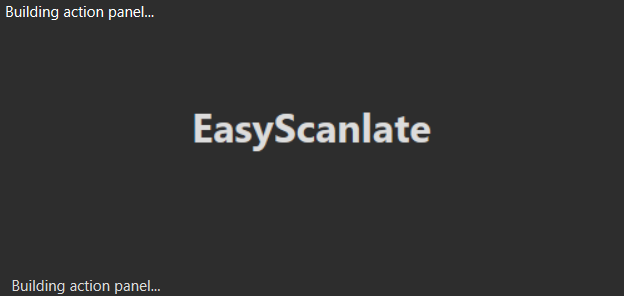
The splash screen provides visual feedback that the app is starting up correctly. Once initialization is complete, you will automatically be taken to the Home Window, your central hub for managing projects.
First-Time Launch
On first launch, the Home Window will show an empty recent projects list since you haven’t opened any projects yet. Use the “New Project” button to get started.
Startup Errors
If the application fails to start, you may see an error dialog. Common issues include:
-
Dependency Error: If PyQt5 is installed instead of PySide6, a dialog will appear with instructions to fix the conflict. Uninstall PyQt5 and install PySide6:
pip uninstall PyQt5 pip install pyside6 -
Project File Not Found: If you specify a
.mmtlfile that doesn’t exist, an error dialog will appear.
For critical startup failures, an error dialog will display and the application will exit.